Guided Tour Budapest Parliament: Is It Worth It?

 Skip to content
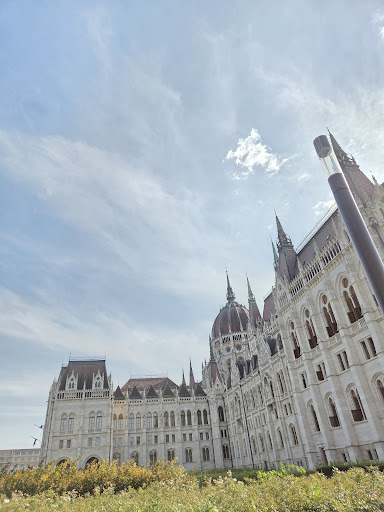
If you have ever stood on Kossuth Lajos Square and looked up at the Parliament building, you will already know the problem – photos do not prepare you for the scale of it. A guided tour Budapest Parliament experience can be one of the highlights of a city break, but only if you choose the right kind of visit for the way you like to travel. Some people want the official interior route and the essentials. Others want the full story, the riverfront setting, the political history, and someone local to help the building make sense.
That difference matters more than many visitors expect. Parliament is not just a pretty façade on the Danube. It is one of the clearest windows into how Hungary sees itself – proud, dramatic, complicated, resilient, and not always easy to read at first glance.
Most visitors mean one of two things when they search for a guided tour Budapest Parliament option. The first is the official interior visit inside the Hungarian Parliament Building, usually on a timed route with access to key ceremonial spaces. The second is a broader experience led by a local guide, where Parliament is the centrepiece but not the whole story.
The official interior tour is worth doing if you want to step inside one of Europe’s most striking government buildings. You will usually see the grand staircase, the Dome Hall, and the Hungarian Crown Jewels display, along with richly decorated corridors and chambers that show off the building’s neo-Gothic splendour. It is visually impressive, and for many first-time visitors that alone makes it worthwhile.
But there is a trade-off. Official visits are necessarily structured. You move at the pace of the group, the route is fixed, and the focus is often on the building itself rather than the wider life of Budapest. If you like clear logistics and a straightforward visit, that works well. If you want context, local stories, or the freedom to ask plenty of questions, it can feel a little thin.
This is where a more personal guiding style changes the experience. Parliament sits in a part of the city that carries a huge amount of symbolic weight. Within a short walking distance, you are dealing with monuments, memorials, state power, revolution, war, occupation, democracy, and national identity. Without context, it is easy to admire the architecture and miss the human story.
When I show visitors this area, I find the building becomes much more memorable once you connect it to the city around it. Why does it face the Danube the way it does? Why is it so extravagant? Why do Hungarians speak about certain historical moments with pride in one sentence and pain in the next? Those are the questions that turn a nice landmark into something more lasting.
That is particularly true for British travellers and other visitors doing a short stay. If you have only two or three days in Budapest, every hour counts. A guide who can place Parliament within the bigger picture helps you understand the city faster, without making the day feel like a lecture.
Usually, yes – but it depends on what you enjoy.
If you love architecture, ceremonial interiors, state history, or simply visiting the buildings that define a capital city, the interior is absolutely worth your time. The craftsmanship is extraordinary, and there is a real sense of occasion as you move through the building. It feels grand in the proper old-European way, but never cold.
If, however, you are less interested in interiors and more interested in atmosphere, viewpoints, and local life, you may get just as much pleasure from seeing Parliament from outside, walking the surrounding square, and approaching it from the riverbank. Budapest gives you several unforgettable angles on the building, especially around sunset and after dark when it is illuminated.
For many travellers, the best answer is not either-or. It is combining the official interior visit with a local-led walk before or after. That way you still see the famous rooms, but you also understand what you are looking at and how it fits into the city’s character.
This is one of those attractions where leaving it to chance is not a great idea. Parliament is one of the most visited sights in Budapest, and timed entry means availability can tighten quickly, especially in spring, early summer, autumn weekends, and the Christmas market period.
If your dates are fixed, book ahead. That is the safest option, particularly if Parliament is high on your list. Last-minute spaces do sometimes appear, but building your day around a maybe is not ideal when you are on a short break.
It is also worth thinking about the time of day. Morning visits can feel efficient and leave the rest of the day open for the Danube, the Castle District, or a thermal bath. Late afternoon can work beautifully if you want to follow Parliament with an evening stroll by the river when the city lights come on. In winter, that golden-blue hour arrives early, which can make the area especially photogenic.
Parliament tends to work particularly well for travellers who enjoy a balance of beauty and meaning. Couples often love it because it feels special without being too demanding. Solo travellers appreciate the structure and security of a timed visit, especially when paired with a local walk. Small groups usually get the most from it when they can ask questions and move at a comfortable pace rather than being swept along in a crowd.
Children and teenagers can enjoy it too, though that depends heavily on how interested they are in history and grand interiors. If younger family members prefer movement and variety, it may be better as one stop in a broader day rather than the whole plan.
For returning visitors to Budapest, Parliament is often more rewarding the second time. Once you are past the first impression of the architecture, the deeper political and historical layers start to stand out.
The easiest way is to build Parliament into a wider experience rather than treating it as an isolated ticket. That could mean starting with a walk through Lipótváros, taking in the square and nearby memorials, then heading inside with a stronger sense of what the building represents. Or it could mean visiting the interior first and then using the riverfront to talk through what you have just seen.
This approach suits the kind of travellers I meet most often – people who do not want to spend their holiday rushing from one checklist item to the next. They want a day that feels smooth, informed, and enjoyable. A personal guide can adjust the rhythm, answer the odd practical question, point out the details most people miss, and fold in the local recommendations that make the rest of the trip better too.
That is also why private or small-group touring appeals to so many visitors in Budapest. The city is full of layers, and Parliament is a perfect example. A standard route shows you the rooms. A local guide helps you read the building, the square, the statues, the memorials, and the mood of the place.
If that sounds like your kind of travel, you can always browse ideas at https://www.budapesttourguy.com and see whether a more tailored day suits your trip.
Bring ID if your ticket requires it, arrive with enough time for security checks, and do not expect airport-style speed if the area is busy. Sensible footwear helps, even though the visit is not strenuous, because many people combine it with extra walking nearby.
It is also worth managing expectations about access. Parliament is a working national institution as well as a visitor attraction, so routes and availability can occasionally change. That is normal. If you travel with flexibility rather than a rigid script, the day tends to go more smoothly.
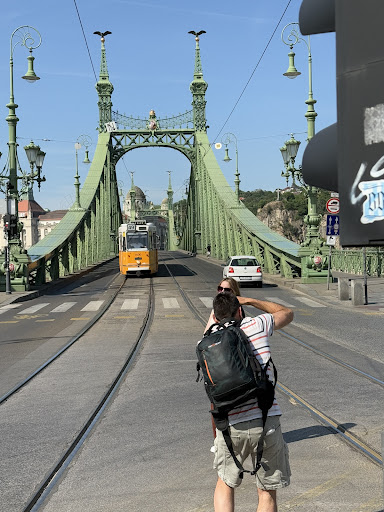
Photography can be a big part of the experience, especially outside. The river side, the square, and the approaches from the tram line all give different moods. If good photos matter to you, light and weather will shape the experience almost as much as the building itself.
Budapest has plenty of famous sights, but Parliament is one of the few that rewards both the quick admirer and the curious traveller. If you give it a little time and the right context, it stops being just the building on the postcard and starts feeling like a key to the city.
Excellent rating
Based on 157 reviews
 My children and I had a great tour with Gabor. He was very informative and knowledgeable, and also accommodating to my children who had to take many stops due to the heat!
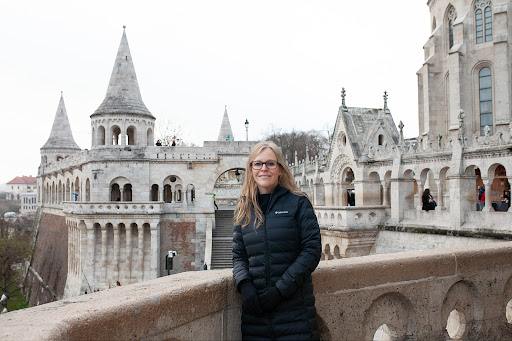
 13 August 2026Gabor took many wonderful family photos for us around the city. We learned more about the culture and history of Budapest during the walking tour. A nice experience. Highly recommended. Good to go early in the morning. It is less crowded in the Fisherman's Castle.+0
 10 August 2026Great tour! Perfect combination of food plus history/cultural information. Definitely recommend!
 15 May 2026Informative and knowledgeable about Hungarian history and culture. Specify your interests and he will adjust the tour accordingly.
 14 May 2026Gabor was a great guide. Very knowledgeable and provided his historical perspective. He was also accommodating - at our request, Gabor incorporate transit into our walking tour to alleviate some of the walking for my older parents. It worked out really well. Thank you!
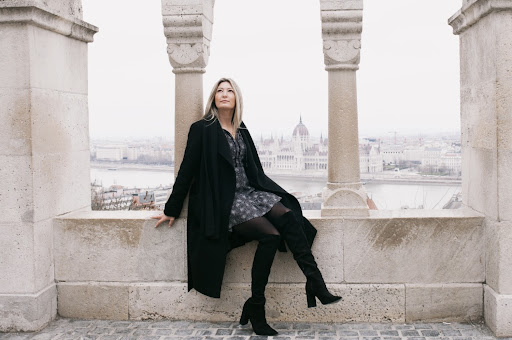
 6 May 2026I had an amazing photoshoot with Gabor in Budapest! He was incredibly kind, knowledgeable, and accommodating from start to finish. He worked with me on a scheduling change without any stress, picked me up directly from my hotel, and even did an extra shoot there which I really appreciated. Not only are the photos stunning, but he also shared so much history and insight about the city along the way. He helped with poses, and even taught me how to use the tram, which made the rest of my trip so much easier. I'm so happy I did this, it was one of the highlights of my trip!+8
 31 March 2026We had a lovely day with Gabor. He took us around Budapest and we saw some lovely places. Very friendly and knowledgeable.
 15 February 2026My husband and I were fortunate to have Gabor as our guide. He was very professional, patient and made the experience fun. He took us to so many photogenic spots. Got our photos back very quickly. Will do it again if we ever get back to Budapest. Glad we signed up with Gabor.
 30 January 2026Die Fotoshooting-Tour mit Gabor in Budapest war super! Er kennt tolle Spots, schafft eine entspannte Atmosphäre und gibt hilfreiche Tipps vor der Kamera. Die Fotos sind hochwertig und authentisch – absolut empfehlenswert!
 4 January 2026Gabor was a highlight of our cruise stop in Budapest. We were there on the 24th of December and unfortunately many places were closed because of the Christmas holiday. However, Gabor was able to find a few places that we were able to visit to taste local delicacies. It was great having a local perspective and Gabor was a wealth of knowledge. We appreciated Gabor’s hospitality and would highly recommend his tours to anyone visiting Budapest!
 27 December 2025I enjoyed my photography tour with Gabor and especially appreciated his flexibility to meet me at an earlier time. He showed me different photography techniques, hidden areas to capture and allowed me to photograph what I wanted. He was also very knowledgeable with several camera models and shooting settings. I had a lot of fun and I highly recommend it! Thank you Gabor!
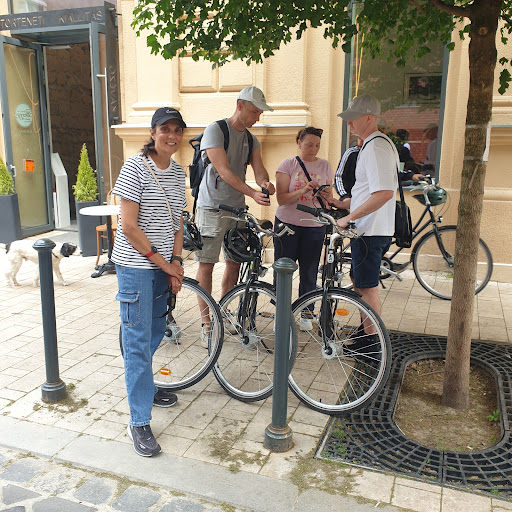
 26 December 2025Gabor is a very friendly and great storyteller with a wealth of historical, cultural and political knowledge! He made our bike tour an amazing experience! Thanks so much Gabor!
 26 December 2025Gabor is so nice and accommodating! Gave us a nice tour of Budapest and took some pictures to remind us of our time there.+1
 24 December 2025We had a wonderful time with Gabor in Budapest! He was very patient with us and knew all the photo spots on both sides of town. We loved hearing about the different buildings and the history of Hungary on our tour.
 22 December 2025Just finished a really nice tour with Gabor via Withlocals. Gabor showed a few nice places to eat which we wpuld never have found by ourselves. Big thumbs up for Gabor!
 10 December 2025I cant recommend Gabor enough. Have an amazing afternoon strolling around Budapest Landmarks and got Gabot to catch my moment there. He’s so talented and have learnt so much from him about Budapest/Hungary history. Got to catch tram and buses for the first time in Busapest. Thank you for such an amazing time.
 4 December 2025Great experience - we learned a great deal about Hungary’s history and culture!
 26 October 2025So knowledgeable. So personable. Would highly recommend. Learned about the history of not just Budapest but Hungary as a whole.
 1 October 2025We had an amazing experience with Gabor. He was friendly, calm and professional. He took us to many places to get lots of different landmarks and poses. He also gave us a very big selection of pictures. If he is still available, book him.
 27 August 2025Gabor is a wonderful, popular guide. My wife and I thoroughly enjoyed our 2 days with him and highly recommend using him as a guide in Budapest. He has excellent english and very wide knowledge of Hungarian history and art and architecture.
 14 August 2025Excellent tour guide … It rained that 2 pm when we were about to start but did not deter him at all .. nobody booked that day except my wife and I needless to say a very private tour for us.. he showed us all the beautiful a nd historic sites in Budapest.. we walked, rode the subway and the tram.. we have a very nice coffee and strudel break.. his recommendations for poppy seed strudel is the best.. Very educated not only History of Budapest, Europe but also beyond.. Thanks to him and we went home with a lot of memories of Budapest.. If there is a six star, I would definitely give to him .. I would use him again next year when we go back with the family … definitely recommend him to anyone who wants a full experience.. he also does photography tour..
 9 July 2025My husband and I both enjoyed our private walking tour. Gabor was a wealth of historical insight into Budapest's history. He was also friendly and flexible.
 23 June 2025Thanks Gabor! You are amazing person with full of knowledge of Budapest. We had great walking tour covering both Buda and Pest sides in 4 hours time using very efficient local transport of Budapest. 🤗+0
 22 June 2025My photographer was very professional and patient because mom cannot walk too much. We had a great time and enjoyed the history he told. Very informative. I would recommend him.
 7 June 2025Gabor was wonderful! If I could I would give him 10 stars!! Highly recommend!!! 7am is early but if you want to get pictures without a ton of people around, it’s the only way to do it! Gabor was kind, professional and patient! Thank you Gabor!+0
 1 June 2025Gabor did a great job taking pictures of our family! He is Highly recommended!!
 1 June 2025Gabor gave an excellent overview of a few areas around Budapest. Learned lots of history and interesting facts about this dynamic city.
 25 May 2025Gavor was extremely knowledgeable and informative and a great host. Highly recommend doing the bike tour with him. Shane from Australia+0
 3 May 2025Gabor is a fantastic photographer... He is very professional and had great time finding nice spots with history behind the locations. Great memories I have of my time in Budapest... Totally worth it... Thank you again Gabor !!!
 2 May 2025Excellent experience! I do not like having my picture taken and was very nervous. Gabor made me feel comfortable. I would highly recommend him to anyone looking for a good photographer.
 18 January 2025Gabor is the best guide to Budapest- he will make your trip unforgettable with his knowledge, kindness and humour!+1
 12 January 2025I did a shoot with my cat and Gabor made it amazing. His pics are top quality, and the result is superb! He’s also a walking traveling book. If you want a special experience when you are in Budapest, book him …. You’ll love it!
 4 January 2025We couldn't be happier by hiring Gabor to capture the precious moment for our family in Budapest. Gabor is not only a great photographer but also a knowledgeable tour guide who taught us so much about the history of Budapest and Hungary. He is very flexible to work with and I really appreciate that even our reserved time is up, he didn't rush to finish the session and spent another hour just to hit the spots that he intended to take our pictures. Although we are not in a rush, he worked so hard to send us the edited pictures in less than 48 hours which was amazing. I felt that I didn't only find a good photographer and tour guide, but also made a good friend in Hungary. Highly recommended!!!
 29 December 2024We were visiting from Sydney for a five day visit to Budapest. Gabor is an amazing tour guide. We wanted a locally connected tour guide and he was certainly that! He was easy going, relaxed, a thorough historian who spoke excellent English. We walked and talked around for more than 3 very interesting & entertaining hours exploring Budapest visiting: * Heroes Square (Hősök tere), * the Museum & Library of Hungarian Agriculture (Magyar Mezőgazdasági Múzeum és Könyvtár) * Magyar Mezőgazdasági Múzeum és Könyvtár * St. Stephen’s Basilica * Buda Castle Precinct * Reteshav, Strudel House….first & best strudel in Budapest At the end of our tour, we were reluctant to leave him to go on our next walking food tour and invited him to come along with us 🥹 but he kindly refused. Even after our tour, he was helping us with recommendations via texts for dinner venues, which were excellent choices. Give Gabor a call, he will tailor a bespoke and personalised Budapest tour for you that won’t cost the earth. You won’t be disappointed!
 28 December 2024the walking tour with Gabor was the best! i learned so much about Buda and Pest and really enjoyed the sights. Gabor was great about tailoring the tour to my interests/questions. a MUST DO in budapest!
 26 December 2024Gabor is definitely worth booking for the sightseeing tour. He is very knowledgable about Budapest/Hungarian history. He is willing to adjust with what his guests want during the tour. We chose a photo-centric tour and he knows alot of good spots to take photos whether a postcard material shot or your portrait on the most interesting spots in Budapest. It’s also a plus that he has got a good sense of humor. Thank you Gabor, we enjoyed the tour alot. Henyr, Winnie
 21 December 2024Loved the walking tour. Very adaptive to our interests and what we wanted to do and see. Good history lesson and good conversations about almost everything. Loved the appel and poppy seed strudel!+1
 6 December 2024Great walking tour. Very informative and educational guide! Enjoyed the sights and the apple strudel.+2
 6 December 2024
Select cookies
Cookies are small text files that the web server stores on your computer when you visit the website.
These cookies cannot be disabled. They are required for the website to work.
To improve the website, including information and functionality, we want to collect analytics. We cannot identify you personally using this data.
By sharing your browsing behavior on our website we can serve you personalized content and offers.
These cookies enable advanced website features such as video playback, chat or embedded content.