Skip to content

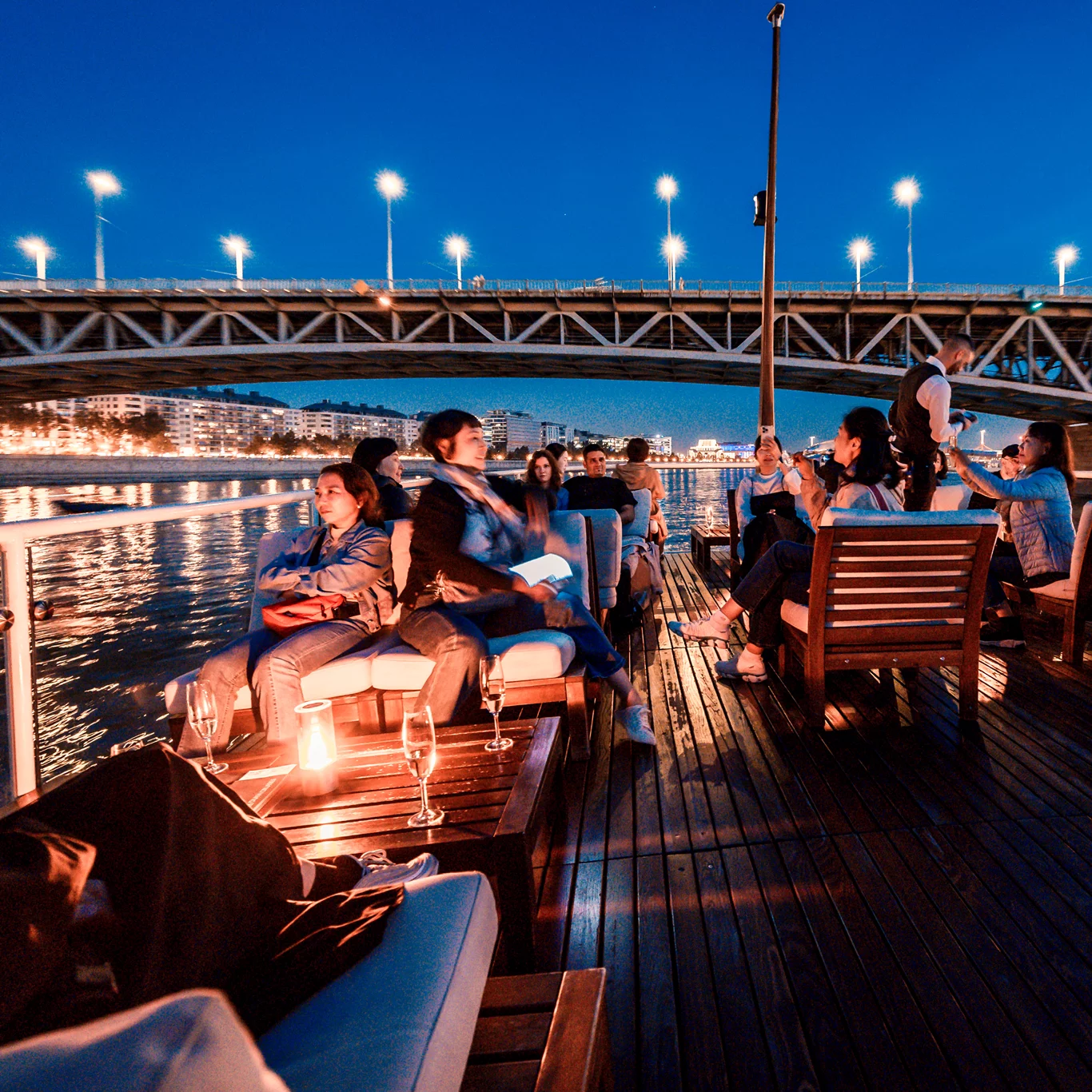

Some cities look better after dark. Budapest is one of the rare ones that feels as if it has been waiting all day for the lights to come on. If you are searching for a Budapest Danube night experience guide, the key is not simply booking a boat and hoping for the best. The real difference comes from timing, route, pace and knowing what kind of evening you actually want.
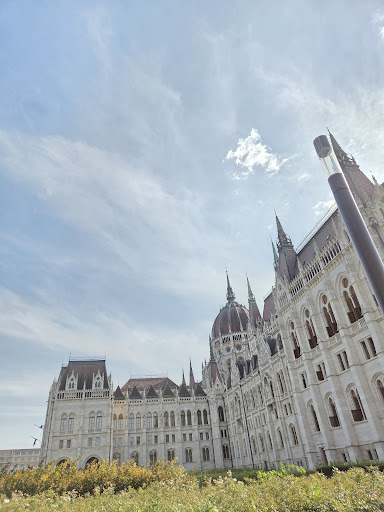
The Danube at night gives you two cities at once. There is the grand, illuminated version – Parliament glowing on the Pest side, Buda Castle sitting above the river, the bridges lit in careful lines. Then there is the lived-in city behind it, where tram lights slide along the embankment, locals head out for dinner, and the riverfront changes mood from one stretch to the next. A good night on the Danube is not only about what you see. It is about how you move through it.
What makes a Budapest Danube night experience work
Plenty of visitors imagine the river experience as one fixed thing. In reality, it can be elegant, lively, romantic, quiet, fast-paced or slow, depending on how you put the evening together. That is why a little planning matters.
The first trade-off is obvious. A cruise gives you wide, cinematic views and a restful way to take in the skyline. A riverside walk gives you atmosphere, flexibility and those small details that never appear in brochures – the sound of the water against the quay, the changing perspective under each bridge, the way Buda and Pest feel different even when facing the same river. If you only choose one, you gain something and miss something.
For many travellers, the best answer is to combine the two. Start with a walk while the city is shifting from dusk into night, then take a cruise once the major buildings are fully lit. Or do it in reverse if you want a dramatic first impression from the water and a more grounded, local finish on foot.
Cruise, walk, or both?
A Danube cruise is the most straightforward option if you want maximum views with minimal effort. This suits first-time visitors, couples looking for a special evening, and anyone who has already walked a lot during the day. From the river, the architecture makes immediate sense. You can see how Parliament relates to the bridges, how the Castle District rises above the bank, and how the city was shaped around the water.
That said, not every cruise feels personal. Some are polished but impersonal, some are festive when you wanted calm, and some move too quickly to let the skyline breathe. If your priority is atmosphere over volume, it is worth choosing carefully and not assuming every evening boat offers the same experience.
A walk along the Danube is better if you like freedom and a stronger sense of place. You can stop for photos, linger at a viewpoint, or adjust your pace if one stretch catches your attention. The embankments feel very different at night. On the Pest side, the riverfront is broad and stately. On the Buda side, the city often feels quieter, with lovely angles back across the water.
Doing both usually creates the richest evening. This is one reason guided night experiences work so well. With local planning, you do not waste your best hour deciding where to stand next.
Best timing for the Budapest Danube night experience guide
Timing matters more than most people expect. If you go too early, the city has not yet reached its full effect. Too late, and some of the gentle evening energy starts to thin out.
The sweet spot is usually around dusk into early night, but this changes with the season. In summer, daylight lingers, so an early evening walk followed by a later cruise often works best. In winter, darkness arrives much sooner and the river can feel wonderfully dramatic earlier in the evening.
There is also a practical side. The time just after sunset often gives you the most attractive light for photos, especially if you want both a deep blue sky and illuminated buildings. Later on, the city can look more theatrical, but the contrast becomes stronger and mobile phone cameras often struggle more.
If you are planning a romantic evening, leave enough room around the river experience rather than cramming it between dinner and another booking. Budapest is at its best when you allow a little drift in the schedule.
Where the views are strongest
A proper Budapest Danube night experience guide should tell you something simple – not every viewpoint is equal, and not every famous location is best at every hour.
From the water, the stretch between Margaret Bridge and Elisabeth Bridge is the classic showpiece. This is where the city feels most complete. Parliament is the star from many angles, but the real pleasure is the balance of the whole riverfront, with bridges framing the view and the hills of Buda adding depth behind the lights.
On foot, the Pest embankment offers some of the clearest, broadest views towards Buda Castle and Gellért Hill. It is ideal if you want that open postcard perspective. The Buda side is often better for looking back towards Parliament, particularly if you prefer a slightly calmer atmosphere.
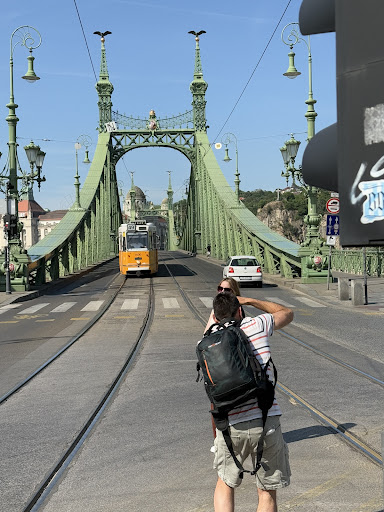
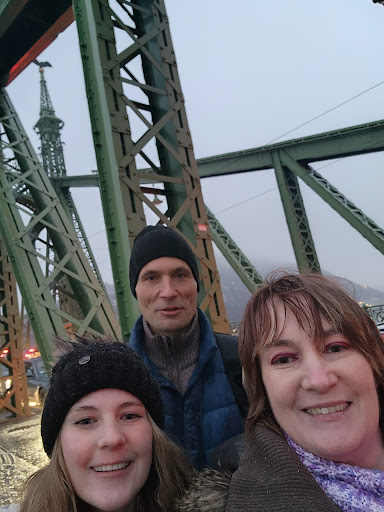
Bridges also matter. Walking part of one bridge at night can transform your sense of the river. You are no longer just beside the Danube – you are suspended inside the view. Chain Bridge is especially striking, but the mood depends on the hour and the level of foot traffic.
How to choose the right kind of evening
This depends on who you are travelling with and what kind of memory you want to take home.
If you are a couple, the river works best when the evening feels unhurried. A quieter cruise or a walk-and-cruise combination is often far more memorable than a louder dinner setting where the city becomes background decoration.
If you are travelling solo, a Danube night can be one of the easiest ways to feel connected to the city without overplanning. You get beauty, orientation and atmosphere all at once. A guided experience can also remove the slightly awkward question of where to go after dark if you do not know the city well.
If you are with friends, think about energy levels. After a full sightseeing day, sitting on the water may be ideal. If everyone still has appetite for the city, a walk that includes stories, photo stops and perhaps a glass of wine afterwards can be the better fit.
Practical details people often overlook
Comfort matters. Even in warmer months, the river can feel cooler at night than inland streets, especially on a boat. Bring an extra layer. In colder seasons, this is not optional.
Footwear also makes a difference if you are combining a cruise with walking. Riverfront surfaces are usually manageable, but long city-break days catch up with people by evening. The wrong shoes can turn a lovely night into a countdown to sitting down.
For photos, the usual mistake is trying to shoot everything quickly. Night views reward patience. Hold still, take a few frames rather than one, and do not spend the whole evening looking through your screen. Some of the best memories are the moments you simply watch the reflections move.
It is also wise to keep expectations realistic. The river is beautiful in light rain and magical on clear evenings, but wind, temperature and seasonal crowds all shape the experience. There is no single perfect version. There is only the version that suits your style best on that particular trip.
Why local guidance changes the evening
The Danube is easy to find. The right experience is harder to improvise. That is where local knowledge earns its place.
A native guide can tell you when to walk, when to board, where the strongest angles are, and which parts of the evening are worth slowing down for. More than that, the river starts to mean more when someone can connect the buildings, bridges and hills to the stories behind them. Without that, even a beautiful night can stay at the level of scenery.
This is especially true if your time is short. A personalised evening saves you from guesswork and helps the city feel coherent very quickly. That is one reason travellers choose a small-group or private format with Budapest Tour Guy – the night feels less like a standard activity and more like being shown the city by someone who genuinely knows how it lives after dark.
The Danube at night is not something to tick off. It is one of those experiences that can quietly become the part of Budapest you remember most. Give it the right hour, the right pace, and a bit of local insight, and the city does the rest.