
Budapest

What to See in Budapest in 4 Days
Wondering what to see in Budapest in 4 days? This local itinerary covers landmarks, baths, food, views and neighbourhoods without rushing.
 Skip to content
Four days in Budapest is a sweet spot. It is long enough to see the grand landmarks properly, short enough to keep a good pace, and just enough time to move beyond a checklist. If you are wondering what to see in Budapest in 4 days, my honest advice is this: do not try to cram in every museum, church and thermal bath. The city rewards a little breathing room.
Budapest works best when you balance the obvious highlights with the atmosphere in between. A castle district view means more when you have also had coffee on a quiet street, walked along the river after dark, and spent an hour in a bath without glancing at your watch every five minutes.
The easiest way to shape four days is to give each day a natural focus. One day for the historic core of Buda, one for the great avenues and bath culture of Pest, one for food, neighbourhood life and the river, and one for the parts that most visitors miss. That keeps travel time sensible and leaves space for surprises.
Begin on the Buda side, where the city gives you its dramatic first impression. The Castle District is one of those places that can become crowded later in the day, so an earlier start is worth it. Walk the cobbled streets around Buda Castle, Matthias Church and Fisherman’s Bastion while the light is still soft and the terraces are not packed shoulder to shoulder.
This is also where visitors often make their first mistake. They rush from viewpoint to viewpoint, take a few photos, then leave. Better to slow down and notice the details – medieval street lines, baroque facades, courtyards hidden behind gates, and the way the Danube divides the city into two very different characters.
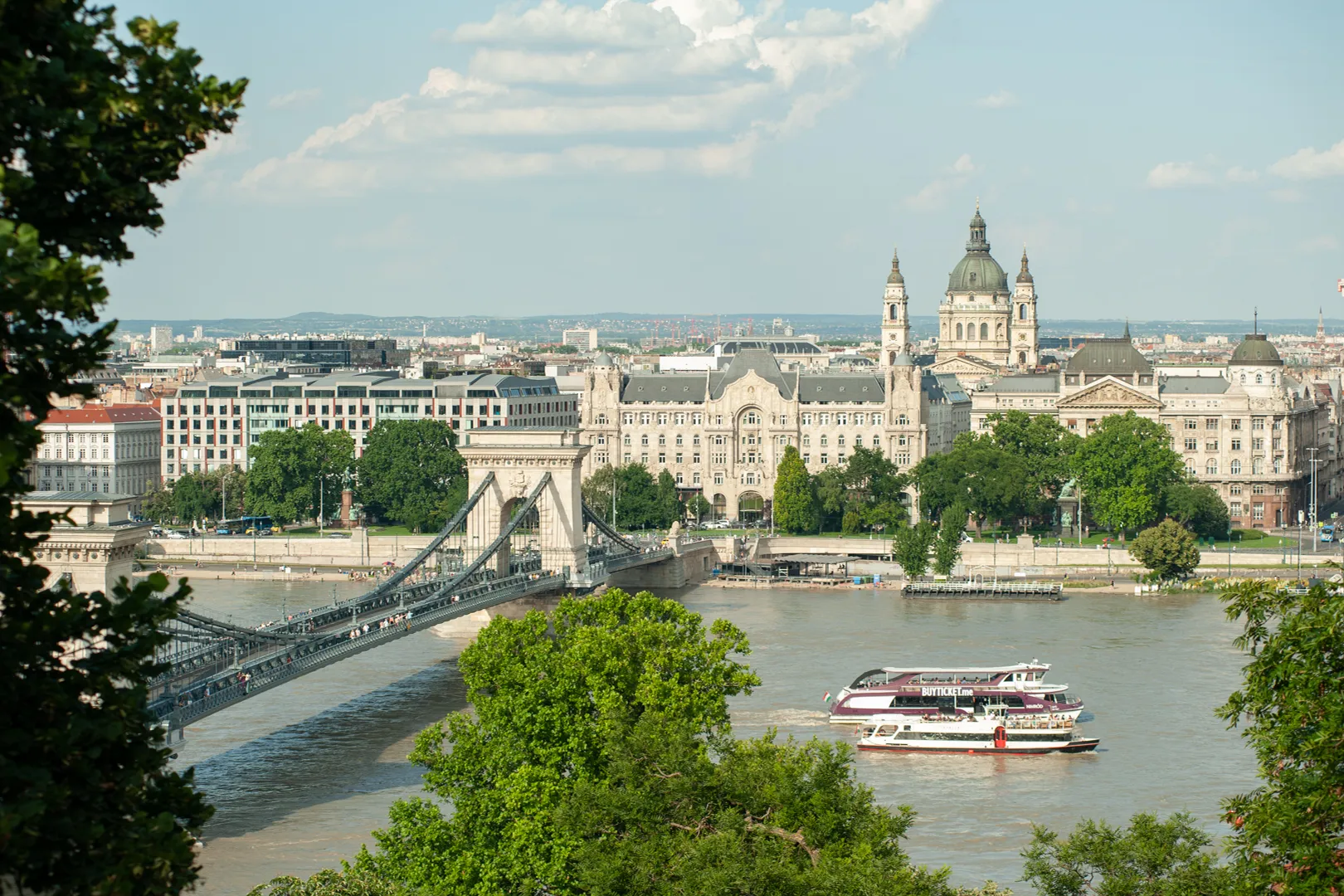
From here, make your way down towards the Chain Bridge area. Depending on your energy and the weather, you can walk or use the funicular, though I usually tell guests that the walk gives you more of a feel for the hill. Cross into the heart of the city and spend the late afternoon around St Stephen’s Basilica. If you like city panoramas, climbing the dome is worth it.
Your first evening should belong to the river. Budapest after dark is not just pretty – it is one of the best ways to understand the scale and elegance of the city. The bridges, the hilltop landmarks, the illuminated facades along the embankment all come together beautifully. A night walk by the Danube is lovely, and a cruise can be even better if you want those postcard views without constantly stopping for photos.
Your second day is for the monumental Pest side. Start at Heroes’ Square, where the city feels wide, formal and confident. From there, walk into City Park. This area gives you several good options depending on your interests. Vajdahunyad Castle is photogenic and slightly theatrical in the best way, while the park itself is pleasant for a slower stroll.
Then make time for one of Budapest’s thermal baths. If this is your first visit, Széchenyi is the obvious choice and, to be fair, obvious for a reason. It is large, atmospheric and memorable. The trade-off is that it can be busy, especially at peak times. If you want scale and spectacle, go for it. If you prefer something calmer and more local in feel, another bath might suit you better. This is one of those places where the right choice depends on your travel style more than any ranking list.
After the baths, head down Andrássy Avenue. It is one of the city’s great boulevards, lined with elegant buildings that still carry the confidence of the late 19th century. The Hungarian State Opera House is a highlight, even if you only admire it from outside. Nearby streets are good for a relaxed lunch or coffee stop.
In the late afternoon, walk through the Jewish Quarter. It has changed a great deal over the years, and today it mixes history, nightlife, street art and café culture in a way that feels very modern Budapest. The Great Synagogue is an important stop if you want to understand more of the city’s layered past. Later in the evening, this district shifts mood again, becoming lively and social without losing its edge.
By day three, most people have seen the famous monuments. This is exactly when Budapest becomes more interesting.
Start at the Great Market Hall, ideally before it gets too crowded. Yes, it is popular with visitors, but it is still a useful place to get your bearings with Hungarian food. You can see paprika in every form, local sausages, cheeses, pastries and seasonal produce, all under one handsome roof. It is a good stop if you want edible souvenirs, but it is better as an introduction than a full culinary experience.
From there, walk into the surrounding streets of the 5th and 9th districts. This part of the city is easy to underestimate because it does not shout for attention. But it is where you begin to notice everyday Budapest – university buildings, side-street wine bars, old shopfronts, small courtyards and residential corners that feel lived in rather than staged.
If food and wine matter to you, this is a very good day to build around them. A proper tasting of Hungarian wines or regional specialities gives context to the city in a way another landmark often cannot. Visitors are sometimes surprised by how diverse Hungarian wine can be, especially if they arrive only knowing Tokaji by name.
Later, take your time along the Danube promenade. The Parliament building is, of course, a must-see, and it is one of the rare famous sights that really does live up to expectations. Seen from close up, it is intricate and imposing. Seen from across the river, it becomes almost unreal. If you are interested in photography, this stretch is one of the easiest places to get strong shots without trying too hard.
This is also a good evening for a more personal experience of the city – a guided walk, a themed tasting, or a photowalk. If you want something more tailored than a standard itinerary, that kind of local-led time can turn a pleasant trip into a memorable one. At Budapest Tour Guy, I have recently updated the Photoshoot&Sightseeing experience for travellers who want both great city moments and better photos to take home.Read the comprehensive descreption of my kind guest: Farrah on Budapest must see attractions
Your last day should not be overplanned. By now, you will have a better sense of whether you want one more major sight or simply more of the city’s atmosphere.
If you still want another headline attraction, Gellért Hill is a strong choice for wide views and a different perspective over the river. The climb is manageable for most visitors, though it is still a climb, so it suits a moderate-energy day rather than a lazy morning. The reward is a broad look at how the city fits together.
If you prefer a gentler pace, spend your final day in one or two neighbourhoods rather than bouncing around. Lipótváros has elegant streets and cafés, Újlipótváros feels more residential and quietly stylish, and parts of Buda away from the castle area can feel wonderfully calm. This is where four days really pays off – you are no longer just sightseeing, you are noticing.
Another smart option for day four is to return to your favourite area at a different time of day. Budapest changes with the light. Morning in the Castle District, late afternoon by Parliament and evening on the river all feel distinct. Returning is not wasted time. It is often when a place finally settles in.
If you have not yet booked a proper meal in a traditional setting, do that tonight. Not somewhere with a queue built entirely on social media fame, but somewhere comfortable, well-run and generous. Hungarian cuisine is hearty, yes, but there is more finesse to it than many visitors expect.
Try not to cross the city unnecessarily. Group sights by area and you will save time and energy. Keep one thermal bath in the plan, but not three. Leave room for evening views because Budapest is one of Europe’s great night-time cities.
And be realistic. If you love museums, you may want to swap out a market or a bath. If you are travelling as a couple, a slower afternoon and a river cruise might suit you better than another packed schedule. If you are a keen photographer, sunrise and blue hour are worth planning around.
Four days is enough for a rich first visit and, quite often, enough to make people want to come back. That is usually the best sign that you have seen the city well – not that you ticked off everything, but that Budapest still feels like it has more to tell you.
Wondering what to see in Budapest in 4 days? This local itinerary covers landmarks, baths, food, views and neighbourhoods without rushing.

Looking for a walking tour Budapest English visitors will enjoy? Here’s what to expect from a local-led walk, and how to choose the right one.

Looking for the best guided tour Budapest offers? Learn what to choose, what to avoid, and how to find a tour that feels personal and worthwhile.

Contact me!
Follow me on social media!